
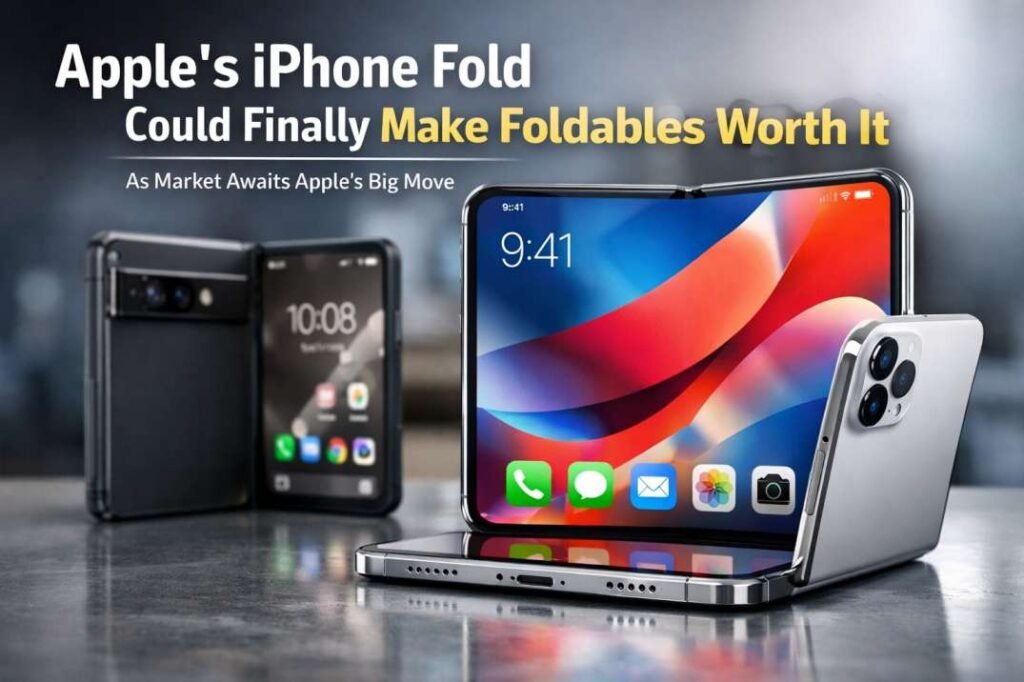

Apple’s iPhone Fold Could Finally Make Foldables Worth It, according to reports. Apple is ready to enter the foldable phone market, as other companies like Google and Samsung have already launched their foldable phones with new and modern ideas, but their adoption has remained limited.
Foldable phones have promised two benefits in one device: they look like a tablet with a large screen and offer tablet-like productivity. Yet, they have faced multiple problems, including poor durability, a heavy and bulky design, high prices, and poor software optimization. If Apple enters the foldable market, it could redesign and enhance the concept to make it more premium and useful for daily life.
Design Upgrades That Could Fix Foldable Flaws
Early foldable phones that prioritized being new and different, Apple may have focused on enhancing and refining the design. According to reports, Apple is expected to launch a book-style foldable phone with premium features like a slimmer body. Apple already has a strong value in the phone industry, usually combining premium materials with small but advanced engineering improvements.
If Apple were to include modern features such as better weight balance, tougher display glass, and stronger hinges, the iPhone Fold would feel more solid and polished.
User Experience: Who Is It For?
If Apple designs the Apple’s iPhone Fold Fold perfectly, it will be targeted at professionals, power users, and creatives who aim to work properly without holding multiple devices. If they could edit documents, watch videos on a large screen, and use two apps at once, then folding the device back into a small phone would be possible.
Daily users want flexibility. A foldable phone that feels powerful yet not too fragile could replace both a smartphone and a small tablet, making it more comfortable and easier to use daily.
Industry Strategy and Market Impact
Apple usually enters a market after competitors, then changes the market. The first iPhone was not the first smartphone, and the first smartwatch was not the first smartwatch, because Apple’s iPhone Fold already had a strong market position with its easy-to-use products and strong connectivity to its other services and devices.
If Apple’s iPhone Fold used the same method as other companies’ foldable phones, it could push other companies to enhance their products, such as making them stronger, improving software, and developing pricing strategies.


