

How Apple’s iPhone Ended Samsung’s Smartphone Reign, one of the finest and incredible stories anyone could hear last year, is, in a nutshell, the story of how Apple, after a long chase, succeeded in taking 1st place from Samsung.
According to reliable sources, almost a decade ago, Samsung ruled the industry, but now, in both smartphone shipments and market share, Apple is in the top spot.
It’s massive news because, through deep research, we found that consumer behavior is changing in terms of pricing and long-term usage, and that couldn’t be neglected.
Samsung doesn’t easily give this spot to Apple; instead, it takes years of refinement in design, performance, and ecosystem integration.
Stats show market growth is slow, and users are focused on reliability rather than new hardware experiments. These things favored the Apple strategies.
Design and Hardware Built for Long-Term Use
When we talk about Apple’s iPhone, some might ask what makes it special. In simple terms, the iPhone emphasizes durability, restrained aesthetics, and comfort in daily use.
Apple plays smartly because it doesn’t chase extreme tech; instead, it focuses on premium materials, limber profiles, and balanced weight distribution, which make the device modern.
Where every phone company focuses on a new design each year, Apple focuses on refining the existing design, creating a form factor that fits professional, creative, and everyday lifestyles equally well.
In older iPhones, the low battery capacity was a problem, but recent models have solved it without significantly increasing size.
As we all know, other mobile companies buy chips from different companies; Apple makes its own chips and optimizes the hardware around them. It allows them to derive longer daily usage while maintaining a clean, minimalist design that appeals to users who keep their phones for several years.
How Apple’s iPhone Ended Samsung’s Smartphone Reign Through Technology
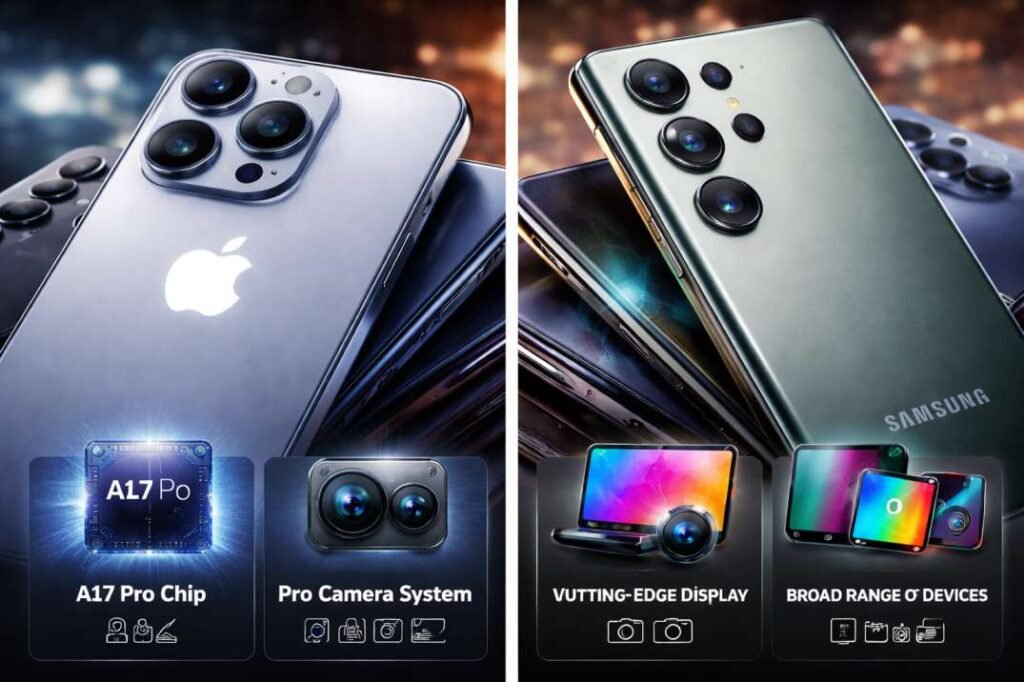
The game is in Apple’s hands due to control over both silicon and software. Chips are designed to provide consistent performance while reducing power consumption.
Camera quality is also good across different lighting conditions because the iPhone prioritises reliability over complexity.
Many companies in the market offered significantly less software or security updates, whereas Apple offers guaranteed long-term updates to secure users’ future usability.
These upgrades helped the company retain existing customers.
User Experience and Everyday Impact
The iPhone aura hits different because it appeals to professionals, first-time premium buyers, and enterprise customers.
Apple’s tech ecosystem levels up the game by seamlessly integrating with wearables, tablets, and laptops, enhancing productivity and reducing the friction of daily tasks across devices.
All the tools are easily accessible to all kinds of audiences.
Consumers trust because the updates are practical rather than flashy, such as stable performance, dependable battery life, and consistent app support.
Industry Strategy and Market Significance
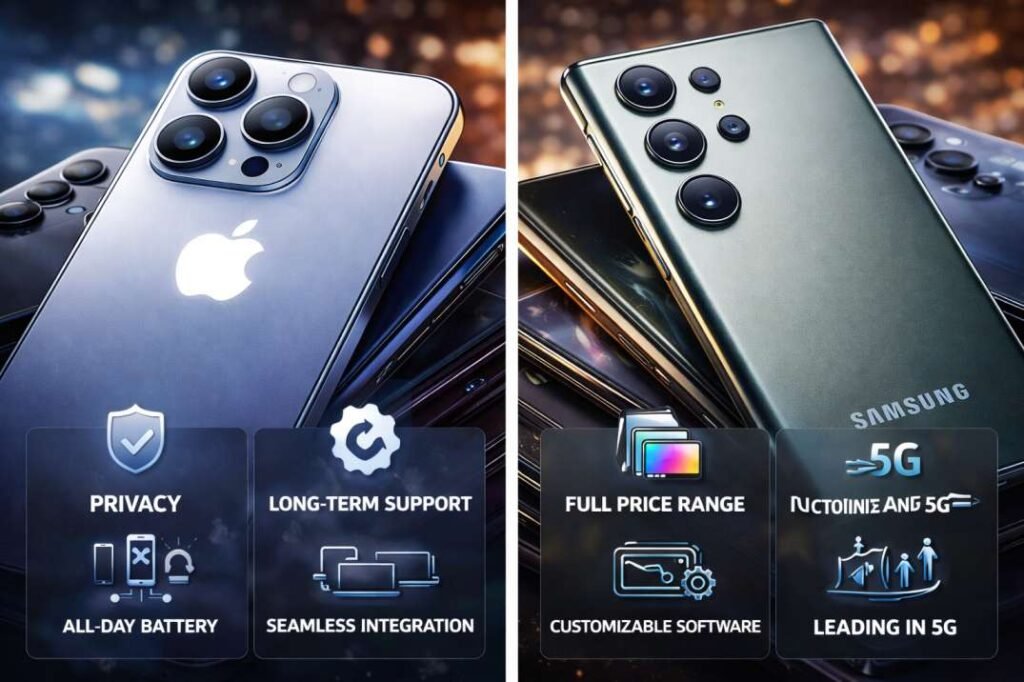
Apple’s strategy is simple: focused on value over volume. At the same time, Samsung is competing across price segments against many competitors.
Apple is taking a large share of the market because of its premium positioning, services revenue, and ecosystem lock-in.
Bottom Line
How Apple’s iPhone Ended Samsung’s Smartphone Reign: consistent refinement, long-term strategies, regular updates, and consumer trust. But the next battleground will be AI and sustainability. Let’s see how Apple will perform there.


